Dele Giwa Remembered
21 October 2026 By Jennifer Omomole
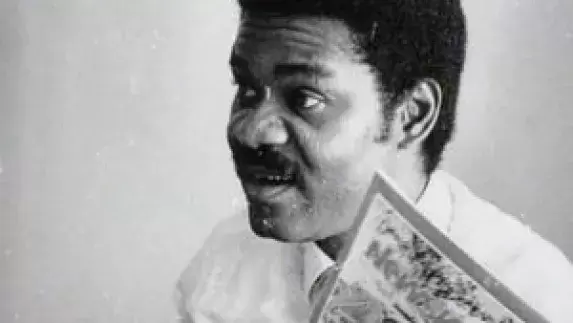 Dele Giwa
'Dele Giwa's Granite Journalism', a compilation of Late Dele Giwa's writings, was presented at the Nigerian Institute of Journalism (NIJ) in Ogba, Lagos, on Monday to mark the 40th anniversary of his assassination. Giwa was a Nigerian Journalist and editor-in-chief of the Newswatch magazine. He was bombed to death on October 19, 1986, while having breakfast at home on a Sunday.
Media dignitaries, friends, and family members attended the event. Sam Amuka Pemu, the chairman of the event, noted in his remarks, "Giwa's influence had endured for decades, demonstrating that his death has not erased his contributions to Journalism. He described Giwa as a Journalist who spoke the truth to power. He added that Giwa has remained a reference point for investigative journalism, press freedom, and the media's responsibility to hold power accountable.
Professor Ralph Akinfeleye, former chairman and head of the Department of Mass Communication at the University of Lagos, said, "We need more Journalists like Dele Giwa - people with charisma and genuine commitment to Journalism of conscience. He said it is disappointing that some people who parade themselves as journalists on television and radio do not uphold the profession's fundamental principles. He called for responsible and ethical journalism.
A former colleague of Giwa, name withheld, said that though Dele's death was tragic, it is fantastic that we are gathered to pay tribute to a departed colleague. "I do not know whether we can replicate Dele Giwa. I worked with him at the Concord and Newswatch; I can say I cannot be him," he responded to a question about whether any journalist in this generation can take over from where Dele Giwa stopped in investigative journalism. "Every individual is different. The training individual journalists receive influences how they practice. However, I learned important lessons from him as my boss. He taught us to practice journalism with vigor, truth, and a commitment to doing our best. Every Journalist can learn from these values. We can learn from his work and draw lessons from it."
The occasion was a talkfest about Dele Giwa, his robust and investigative Journalism, and the profession without him after his death. A paper presented by the IPC director, Dotun Arogundade, mentioned the failure to resolve the assassination and that it presents a case for justice, accountability, journalists' protection, and seeks for investigation into Dele Giwa's murder to be reopened. The paper also called attention to other journalists killed whose cases have remained unresolved, showing that people get killed in the line of Journalism duty most of the time, and that the problem is more about getting the killers to account for their evil.
Dele Giwa's 41-year-old youngest daughter, Aisha, who was one year old at the time of the assassination, also spoke at the occasion. According to her, the mother said she was one year old at the time; she was asleep just a moment after the mother moved her upstairs, when the explosion sounded. She said the book would help further her father's memorial and the public appreciation of him.
HTML Comment Box is loading comments...
